You are everyone you see. I don’t mean it as a symbolism or something to think about. I mean it’s the fact of life. You are everyone you see. That man over there is no less you than what you call yourself. Yourself is not this body. You are the infinite invisible. And it’s silly – when you have all – to be settled down into a microcosm where you have nothing. All substance is you. There is not another substance in the world. When we get back to the atom and follow it down to the micro atom it disappears.
Herb Fitch 1990
Chicago Healing Seminar
4A Raise the Dead
Go to the very end of conflict -JK
Question: If you go to the end of conflict for yourself, must you then just accept the conflict which is in the world?
KRISHNAMURTI: Can you divide the world so very neatly and definitely from yourself? Is the world so very different from yourself? You see, sirs, I think, if I may say so, that there is something which has not been understood by us. For me, conflict is a very destructive thing, inwardly as well as outwardly, and I want to find out if there is a way of living without being in conflict. So I do not say to myself that it is inevitable, and I do not explain to myself that as long as I am acquisitive, there must be conflict. I want to understand it, to go through it, to see if I can shatter it, to see if it is possible to live without it. I am hungry to do that, and no amount of description, explanation is going to satisfy me—which means that I have to understand this whole process of consciousness, which is the ‘me’, and in understanding that, I am understanding the world. The two things are not separate. My hate is the hate of the world; my jealousy, acquisitiveness, my urge for success—all this belongs also to the world. So can my mind shatter all this? If I say, “Tell me the way to shatter it,” then I am merely using a method to conquer conflict, and that is not the understanding of conflict.
So I see that I must keep awake to conflict, be aware of it, watch every movement of it in my ambitions, my greed, my compulsive urges, and so on. And if I just watch them, perhaps I shall find out, but there is no guarantee. I feel I know very well what is essential if I would find out—namely, a passion, an intensity, a disregard for words and explanations so that the mind becomes very sharp, alert, observant of every form of conflict. That is the only way, surely, to go to the very end of conflict.
The Collected Works of J. Krishnamurti -Volume XII 1961: There Is No Thinker, Only Thought
Jiddu Krishnamurti
State of Bliss -RM
Transporting me into a realm of pure bliss,
the vision of the authentic Self expanded within my heart
and I attained the state of grace whose essence is love.
Then, in the state of holy silence,
bliss and love merged together into realization
of the one true reality,
which is the experience of Lord Siva.
(Muruganar – Sri Ramana Anubhuti)
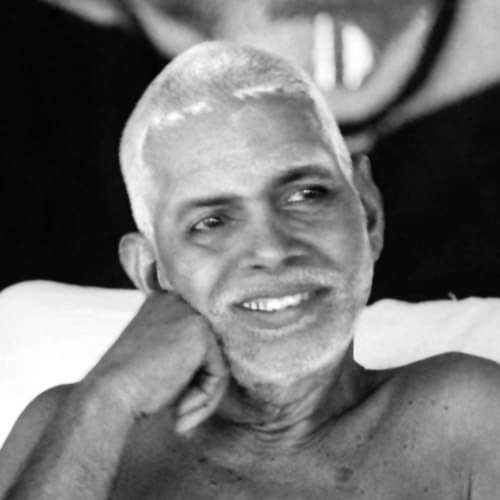
Experiencer brings conflict VS -RSpira terminology
It means, really, going into the whole question of self-fulfillment and the conflict of the opposites, and to see if there is any reality for the thinker, the experiencer who is everlastingly craving for more experience, more sensation, wider horizons.
Is there only thinking and no thinker, only a state of experiencing and no experiencer? The moment the experiencer comes into being through memory, there must be conflict. I think that is fairly simple if you have thought about it. It is the very root of self-contradiction. With most of us the thinker has become all-important but not the thought, the experiencer but not the state of experiencing.
This really involves the question we were discussing the other day of what we mean by seeing. Do we see life, another person, a tree through ideas, opinions, memories? Or are we directly in communion with life, the person, or the tree? I think we see through ideas, memories, and judgments, and that therefore we never see. In the same way, do I see myself as I ‘actually am’, or do I see myself as what I ‘should be’, or what I ‘have been’? In other words, is consciousness divisible? We talk very easily about the unconscious and the conscious mind and the many different layers in them both. There are such layers, such divisions, and they are in opposition with each other. Have we to go through all these layers one by one and discard them or try to understand them—which is a very tiresome and ineffectual way of dealing with the problem—or is it possible to brush all the divisions, the whole thing aside and be aware of the total consciousness?
The Collected Works of J. Krishnamurti -Volume XII 1961: There Is No Thinker, Only Thought
Jiddu Krishnamurti
Total freedom -JK
Can the mind observe its content without any choice as to the content, not choosing any part of the content, any part of the piece, but observing totally? Now, how is it possible to observe totally? When I look at a map of France, as I come from England and cross the Channel, I see the road leading to Gstaad. I can tell the mileage, I can see the direction. All that is very simple because it is marked on the map and I follow it. In doing that, I do not look at any other part of the map; I know the direction in which I want to go and that direction excludes all others. In the same way, a mind that is seeking in a given direction does not see the whole. If I want to find something that I think is real, then the direction is set and I follow that direction and my mind is incapable of seeing the totality. Now, when I look at the content of my consciousness, which is the same as yours, I have set a direction—to go beyond it. A movement in a particular direction, seeking a certain pleasure, not wanting to do this or that, makes one incapable of seeing the whole. If I am a scientist, I see only on a certain direction. If I am an artist, there again. If I have a certain talent or gift, I see only a certain direction. So the mind is incapable of seeing the totality and the immensity of that totality if there is a movement in a particular direction. So can the mind have no direction at all?
This is a difficult question. Please listen to it. Of course, the mind has to have direction when I go from here to the house, or when I have to drive a car, when I have to perform some technical function; but I am talking of a mind that understands the nature of direction and, therefore, is capable of seeing the whole. When it sees the whole, it can then also operate in direction. If I have the whole picture in mind, then I can take in the detail; but if my mind only operates in details, then I cannot take in the whole. If I am concerned with my opinions, with my anxieties, with what I want to do, with what I must do, I cannot see the whole. Obviously. If I come from India with my prejudices, superstitions, and traditions, I cannot see the whole. So can the mind be free of direction? Which does not mean that it is without direction. When it operates from the whole, the direction becomes clear, very strong and effective; but when the mind only operates in a direction according to the pattern it has set for itself, then it cannot see the whole.
Total Freedom: The Essential Krishnamurti
Krishnamurti
Greed breeds envy and hate -JK
Greed in its many forms puts man against man, bringing disunion and contention. Balance, coordination, is necessary for completeness; mere control or denial of the objects of craving does not free thought from greed, envy. Only through understanding the process of craving, by becoming aware of it, is there a possibility of thought freeing itself from it. Awareness is not mere analysis or self-examination. Meditation is interested concentration, the awareness in which the conflict of opposites ceases.
Greed breeds envy and hate. Imitation is the result of envy. Our social structure is based on envy and imitation. One of the main causes of division in society is envy and the craving for success; each is imitating the one above him. Many of us desire to belong to the socially elect. This imitative process keeps the social division going from generation to generation.
This same attitude and action exist in the so-called spiritual realm. There too we think in terms of progressive hierarchical achievement. Such attitude is born of greed and envy, which produces imitation and fosters fear; the idea that one day you will become a Master or a higher being is similar to your becoming one day a knight or a duke. It is repulsive and not ennobling to a man of thought.
There is expansion, growth, in greed and envy but not in freedom from them. There may be growth or evolution of the outer, of the periphery, but not of what is true. The freedom from greed and envy is not progressive; you are either free or not free from them. This freedom is not the result of evolution, growth. If we understand need utterly dissociated from greed, craving, and envy, then social and personal conflicts cease, then thought is free from worldliness.
The Collected Works of J. Krishnamurti – Volume III 1936-1944: The Mirror of Relationship
Jiddu Krishnamurti
Right meditation -JK
Question: Can continued effort in meditation lead to full awareness?
KRISHNAMURTI: Without true discernment mere concentration on an idea, image, or virtue leads to barrenness of thought and to the destruction of love. Discernment comes through constant awareness of our daily thought, speech, and action; without this true corrective element, meditation becomes an escape, a source of delusion. Without understanding and love, any form of meditation must lead to illusion; without true awareness, any form of meditation is an escape from reality.
When there is awareness we observe that thought is ever approximating itself to a pattern, to a memory, to a past experience; it is measuring itself against an opinion or a standard. Though mind may reject outward patterns, standards, values, yet it may cling to its own so-called experience; this experience without true discernment may be the continuation of narrow and prejudiced thought and unless mind frees itself from its bondages, meditation only strengthens its own limitation. So through alert awareness of daily thought, speech, and action, thought must free itself from its fetters; this freedom is the true beginning of meditation.
When thought is occupied with approximation, then it is concerned with achievement, with success, and so it is no longer capable of true discernment, for the desire to gain, to attain, springs from fear which prevents true perception. Fear cannot yield understanding, but in becoming intensely aware of the causes of fear in our daily life, interest and discernment are born. Interest is natural concentration without the conflict of opposing desires. We force ourselves to concentrate without this interest, and so it becomes artificial, painful, and has no deep significance. Understanding does not come through compulsion or through mere control but through constant and earnest awareness of our daily thoughts and activities, of our speech and work. Meditation must spring from this awareness. The cultivation of so-called occult powers, trances, and so forth is of very little importance. Without true discernment mere concentration on images, standards, and ideals does not lead to comprehension. Creative stillness of the mind is necessary for the understanding of reality.
The Collected Works of J. Krishnamurti – Volume III 1936-1944: The Mirror of Relationship
Jiddu Krishnamurti
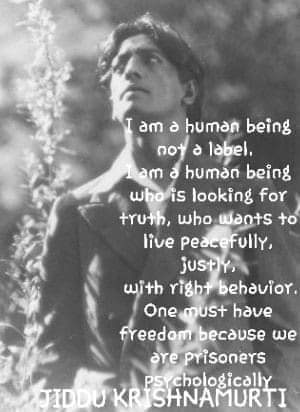
Teachings of Robert Adams
Tom Das
Liberation & Non-Duality
MENU
Spiritual enlightenment: powerful teachings from Robert Adams
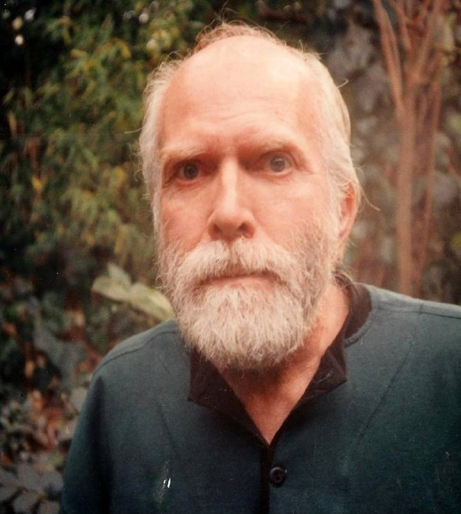
Robert Adams (1928-1997), who I think I can rightly call a devotee of Ramana Maharshi, taught in his later years in the USA. From what I’ve read of his teachings, they are incredibly similar to the verbal teachings of Ramana Maharshi, and also have a sense of openness, precision and clarity.
I’ve trawled through a few of his writings and put together some excerpts that I hope will be of benefit to the seeker of spiritual enlightenment. This is not meant to represent the complete scope of Robert Adam’s teachings, but just to highlight some key points that leapt out to me as I read through. I particularly concentrated on the role of thought in Robert Adam’s teachings.
I have bolded some phrases that seemed important to me and also interspersed some very brief comments in red. Again, I hope this is of benefit to you.
Firstly, some teachings about ‘no thoughts’, which will be expanded upon later on. In the initial quotes Robert says ‘no thoughts’, but in the later quotes he explains exactly what this means.
Sitting here quietly, peaceful, without thoughts then you are the unblemished Self. The ultimate reality, this is you right now. As soon as you start thinking about it, it goes away, it changes, it’s not you any longer, it’s your humanhood. So when I say to adore your Self I am referring to adoring yourself as God, as the ultimate reality which is really you. But if you think of yourself as a human being with problems who makes mistakes you cannot adore yourself at all. You condemn yourself you put yourself down.
Liberation means that you’re totally and completely free, without thoughts. There are no thoughts in the Self. If there were thoughts in the Self, it wouldn’t be the Self. For the Self is only one and all-pervading. When you become absorbed in the Self, it’s completely different than what you ever believed. It’s not explainable. But as far as you’re concerned, you become totally free, happy, peaceful. There is no longer anyone to argue with or become upset over. This is the Self.
It’s very simple, no thoughts and you’re free.
Now a bit about a method of creating a state in which there are no thoughts:
See what you’re doing now. You’re thinking. That spoils it. Learn to stay without thought. Even if for a few seconds. It’s hard isn’t it. This is the reason you have to ask yourself, “To whom do these thoughts come?” It’s only a modality to cause you to stop thinking. (slight pause)
Some of you are beginning to feel what I’m talking about. No thoughts. Nothing to remember. Nothing to do. When thoughts come to you about your affairs, about your predicament, realize that you have surrendered your affairs and your predicament to the Self and all is well.
In other words there should be no situation that appears strong enough to set you off. Feeling miserable or feeling too happy. No thing should have that power. It’s called the thoughtless state.
It’s really not that hard. Let go. Close your eyes, it’ll help. If you have to do something, observe your breath. But if you can’t, forget about your breath. After all, to whom does the breath come? To the body. Since there is no body there is no breath. Then what is? I-am. What is I-am? Silence. Open your heart, let go. There is no past, no future. No thing can ever harm you. You exist in eternity. Be still. The breath does not exist any longer. There never was a body.
There is only that. Silence.
Your job is to stop thinking. To remove the thoughts. The thoughts are your Master now. That make you feel sad or happy, good or bad. Why do you feel this way? For your thoughts since you were a little kid have been impressed by the world conditions, by your parents, by your school, by your church and they have convinced you and programmed you to believe this is good, this is bad, this is right, this is wrong. Only when you have this are you successful. If you don’t have certain things you are a failure. It is the thoughts that tell you these things. Again if there are no thoughts there is noone left to tell you anything. This is called liberation, moksha, freedom. You begin where you are now. You begin with yourself. You question yourself. You inquire, “Who am I?” You sit in the silence. If thoughts come you inquire, “To whom do they come? You become still.”
When the mind is quiet the thoughts subside. When there are no thoughts there is the self. So all these practices are really to quieten the mind, not for any other purpose. No matter what form of sadhana you’re practicing. Whether you’re a Jnana or bhakta or karmic yoga or anything else they’re really the same. All of these practices are simply to quieten the mind. To make the mind one pointed. When the mind becomes one pointed self-inquiry becomes very easy. Then the mind will disappear completely and you’ll be free.
And what about feelings?
Body sensations are the same as thoughts. As you keep inquiring, “Who am I?” And you stay in the space between the answer, between the question. Then the body thoughts become less and less and the thoughts become less and less, they’re the same thing. The feelings and the thoughts are nothing as you practice sel finquiry. You ask, “Who does this come to? It comes to me. I think this. Who am I?” And when you keep still your body sensations will slow down, as well as your thoughts. And soon there will be no body sensations, there will be no thoughts. There will be nothing. So body sensations are the same as thoughts. T139: Existence Is Not In Form! 1500 When one goes the other goes also. You cannot have body sensations without thoughts. There has to be a thought about a body sensation. So when the thoughts dissipate, the body sensations will also dissipate.
Is no-thoughts the same as self-realisation?
The no mind state is when you’ve come from practicing, to the place in the silence. Where there are no thoughts bothering you any longer. You get there through self inquiry. That is the fastest way. But that is not self-realization. Self-realization is when the mind is pulled into the spiritual heart…
…Liberation, moksha, self-realization is when the mind that’s left over in the silence is pulled completely into the spiritual heart. At that time your whole mind, the I dissolves completely and you are free.
So the no mind state is a very high state. It’s the state of bliss. But there is still somebody left to experience the bliss. When the bliss is pulled into the heart there is no one left to experience anything. Therefore you no longer say, “I’m in the no mind state.” At that time there is nothing to say. Can you understand that?
I’m scared. What will happen if I don’t think?
The thoughts and the ego are synonymous. As the thoughts slow down, the ego slows down, and begins to also disappear with the thoughts. When there are no thoughts, there’s no ego. When there’s no ego, there’s nobody left to think. Then the question you will ask is, “How do I function without thinking?” As I mentioned in the beginning, the sage’s thoughts are like a burnt rope. They appear to be real, but they’re not. In other words, your thoughts are not real. They are false. How do you function without thoughts? Very well, thank you.
Many of you still believe you have to have thoughts to function. You think you’ll become a vegetable, but you will be spontaneous without thoughts. You’ll be motivated by the Self. You will know what to do, where to go, whom to speak to, whom not to speak to, much better than you do now, much, much better. Things will happen to you spontaneously. Everything we always talk about is very paradoxical, and the paradox here is, even though you have no thoughts, you will still think about certain things. It has to be done. But there’s absolutely no thinker alive. There’s no thinker. There is no one left to think, yet you still appear to be thinking about certain things, so you can function. It’s similar to what we were discussing on Sunday. People always ask me, “What do you see? Do you see the world?” Of course I see the world. If I didn’t see the world, I wouldn’t be able to function. But I see the world as the Self. In other words, I see the world as images on reality, like in the movies, the images on the screen. I’m able to see the screen and the images at the same time. I see reality and I see the images. So it is with the thoughts, the same thing with the thoughts. You appear to be thinking, but you’re not thinking. This is a very important point to remember. You will think whatever you have to think about, but the thoughts will be dead, like the burnt rope, like the fan with the plug pulled out, but the blades are still spinning, until they stop.
But can we really stop our thoughts? It that actually possible?
Now really, no Sage on this earth or anywhere else really stops the thoughts. As long as you see a body, and you call that body the Sage, there will always be some sort of thinking in that body, some sort of thought. For instance I can be sitting here and I’ll say to myself “when I go home I’m going to eat a dish of ice-cream”. This is a thought. But what happens when I say it and what happens when you say it?
When I say it, when I think it, it is similar to a burned rope. A burned rope may appear to be strong, but when you pick it up, it turns to ashes. It’s burned. There’s nothing there. When you say it, it is like a real rope, not burned. You give it energy, you give it power. Again when the Sage thinks of something, it is like a fan that has been pulled out of the socket. It’s still turning, but there’s no power. The power is dead. The power has been cut off. In other words, the source of a Saint is dead. The source of the Sage has no power, no power whatsoever. This is why it is said, a Sage does not think. A Sage has no thoughts. What it really means is that the Sage’s thoughts are dead.
When the thoughts are dead, you live in ABSOLUTE REALITY. You live in PURE AWARENESS. When the thoughts are dead you live in SAT-CHIT-ANANDA, in NIRVANA. So what do you have to do to also cease thinking, so the thoughts can become dead? You simply do not attach yourself to the thoughts. By not attaching yourself to the thoughts, by not reacting to the thoughts, by not responding to the thoughts, they lose their power and begin to fade away. Yet do not give them any energy. Do not give them any power. Do not say to yourself, I have to stop my thoughts. Do nothing like this. Just slow down, slow down. Let the thoughts do what they may. Allow the thoughts to go their own way. Do nothing with your thoughts. Do not think about them. Do not fight them. And above all, do not try to stop them. You may think this is so difficult, but it’s not.
It’s like when you first wake up, before the thoughts come. You’re still drowsy from sleep. And when the first thoughts come to you, you hardly pay any attention to them. That’s the attitude to have.
Don’t know sh.t
An atheist was seated next to a little girl on an airplane and he turned to her and said, “Do you want to talk? Flights go quicker if you strike up a conversation with your fellow passenger.”
The little girl, who had just started to read her book, replied to the total stranger, “What would you want to talk about?” “Oh, I don’t know,” said the atheist. “How about why there is no God, or no Heaven or Hell, or no life after death?” as he smiled smugly.
“Okay,” she said. “Those could be interesting topics but let me ask you a question first. A horse, a cow, and a deer all eat the same stuff – grass. Yet a deer excretes little pellets, while a cow turns out a flat patty, but a horse produces clumps. Why do you suppose that is?”
The atheist, visibly surprised by the little girl’s intelligence, thinks about it and says, “Hmmm, I have no idea.”
To which the little girl replies, “Do you really feel qualified to discuss God, Heaven and Hell, or life after death, when you don’t know shit?” And then she went back to reading her book.
In plain, simple, clear English
IN CLEAR, SIMPLE, PLAIN ENGLISH !!
What is sought in spiritual practice.? eg sitting, silencing the mind? Noone achieves enlightnment. All this is in the realm of illusion. In fact, you were never born, and will never die. Things are just happening according to Tao or dharma or whatever term for what the universe is manefesting outside your will. There is no real ego to vanquish. You have no form, and no concept affects you. The I thought or personality is but a shallow program. So everything is ego less, without purpose and fleeting. Dreams and role playing seem to happen, but that is not reality. All this seeking and thrashing and drama just perpetuates confusion and illusion. Nature is the eternal reality. Only the real is. You are the infinite, One in Nature.
~ Ben Hafer